
- SmileHQ
What Is Teeth Whitening?
Teeth whitening is a cosmetic dental treatment that lifts surface and deep stains from natural enamel using peroxide-based bleaching agents. The three main teeth whitening options are in-office professional treatment, dentist-supervised at-home trays, and over-the-counter (OTC) products.
What separates these methods is the concentration of peroxide, the fit of the application, and the level of professional oversight. At SmileHQ, our team helps you sort through the choices so you get results that match your goals. One thing to keep in mind: whitening only brightens natural tooth structure. Crowns, veneers, bonding, and tooth-colored fillings won’t respond to peroxide, which is why a quick exam with your smile consultant matters before you start.
How Does Teeth Whitening Work?
Each whitening method uses the same core science but delivers it in a different way. Peroxide, either hydrogen or carbamide, breaks down stain molecules inside enamel and dentin, revealing a brighter shade underneath. What changes from one method to the next is the strength of the gel, how it’s held against your teeth, and who’s watching.
How Does In-Office Whitening Work?
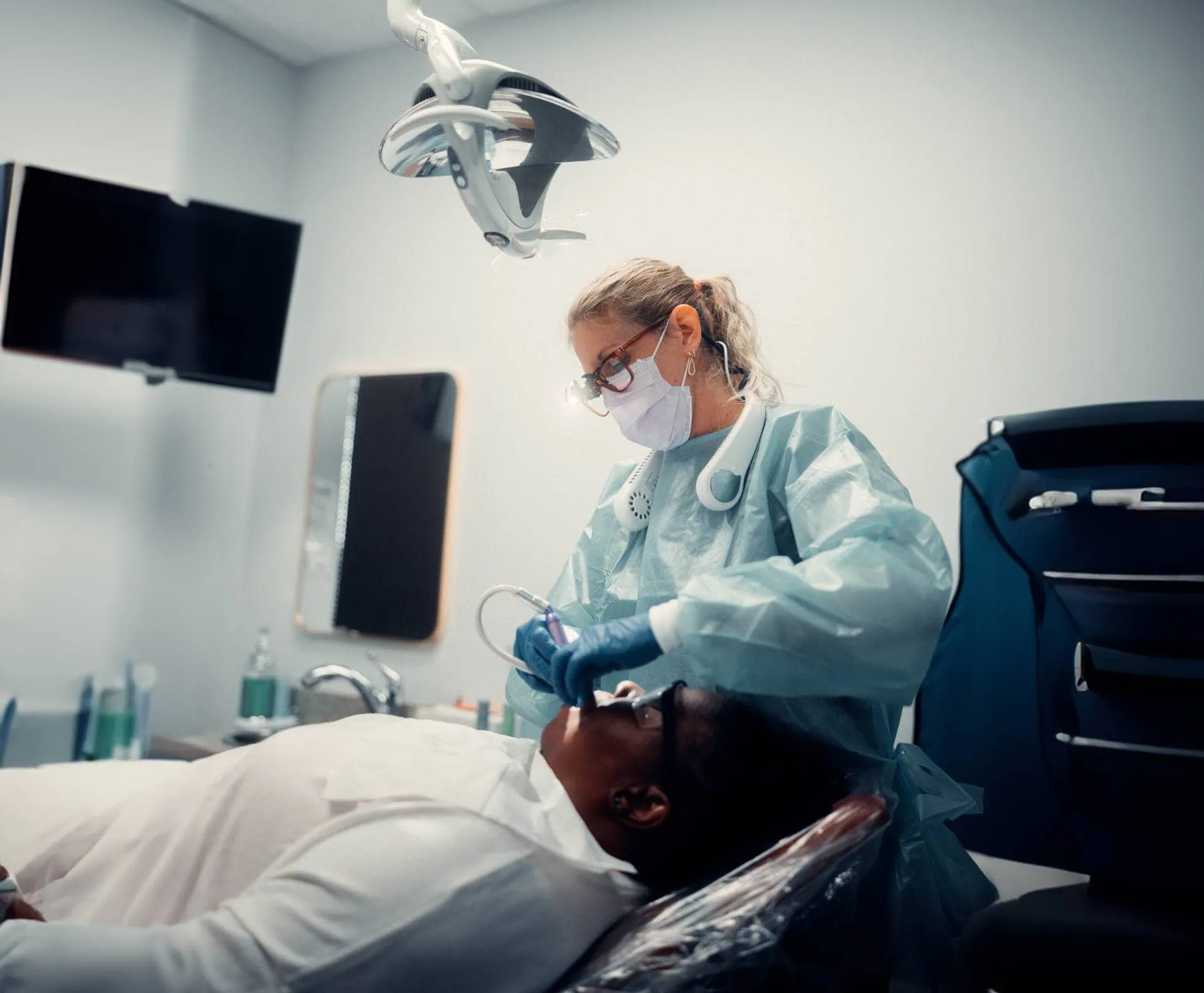
Your smile consultant applies a high-concentration whitening gel directly to your teeth after protecting the gums. Some systems pair the gel with a specialized light to speed up activation. Most patients see visible results after a single visit lasting about 60 to 90 minutes.
How Do Custom Take-Home Trays Work?
We take impressions of your teeth and craft trays that fit precisely. You wear the trays at home with a professional-strength gel for a set amount of time each day, usually over one to two weeks. The custom fit keeps the gel on your teeth and off your gums.
How Do Over-the-Counter Products Work?
OTC options include whitening strips, brush-on gels, pens, rinses, and toothpastes sold at drugstores. Peroxide levels are much lower than what your smile consultant can provide, and the applicators are one-size-fits-all, so coverage is uneven from tooth to tooth.
What Is the KöR Whitening System?
For stubborn stains from tetracycline, aging, or years of coffee and wine, some patients benefit from a hybrid protocol. This combines in-office sessions with a custom at-home phase for deeper, more uniform results across the whole smile.
Benefits of Professional Teeth Whitening
Choosing a professional option offers advantages you won’t get from a drugstore aisle:
- Faster, more dramatic results. Higher peroxide concentrations lift stains that OTC products simply can’t reach.
- Lower risk of gum irritation. Your smile consultant protects soft tissue before the gel goes on, and custom trays keep the product where it belongs.
- Even, predictable shade. Custom-fitted trays cover every tooth uniformly, so you avoid the patchy results common with strips.
- Longer-lasting brightness. Professional whitening tends to hold its shade longer, especially when paired with maintenance guidance from our team.
- A healthy starting point. Before any whitening begins, we screen for decay, gum irritation, or exposed roots that could make a whitening session uncomfortable.
Our dental providers at SmileHQ, including credentialed clinicians like Dr. Emike Aliu (DDS) and Dr. Christina Woo (DMD), follow careful, enamel-safe protocols so your whitening is both effective and gentle on your teeth. That professional oversight is the biggest reason patients trust in-office and dentist-guided whitening over guesswork from the store shelf.
In-Office vs. At-Home vs. Over-the-Counter: Full Comparison of Teeth Whitening Options
Every whitening method has trade-offs. The right choice depends on how quickly you want results, how much you want to spend, and how stubborn your stains are. Here’s a side-by-side look at the three whitening options compared:
| Feature | In-Office Whitening | Custom Take-Home Trays | Over-the-Counter |
|---|---|---|---|
| Speed of results | 1 visit, same-day | 1-2 weeks of daily wear | 2-4 weeks, sometimes longer |
| Peroxide strength | Highest (professional grade) | Moderate (professional grade) | Low (consumer grade) |
| Fit / coverage | Applied by dental provider | Custom-molded to your teeth | One-size-fits-all |
| Cost | Highest upfront | Mid-range | Lowest upfront |
| Supervision | Full dentist oversight | Dentist-guided, at-home use | None |
| Sensitivity risk | Managed by provider | Managed with tray fit and timing | Higher due to gel leakage |
| Best for | Fast results before events | Gradual brightening at your pace | Mild surface stains, maintenance |
| Longevity | Longer with maintenance | Longer with maintenance | Shorter, needs frequent reapplication |
When Does In-Office Make Sense?
If you have a wedding, reunion, or photoshoot on the calendar and want visible change in one exam, in-office is the fastest route you can take.
When Do Take-Home Trays Fit Best?
If you’d rather whiten on your own schedule with professional-strength gel, custom trays give you control without sacrificing quality. They’re also useful for long-term touch-ups whenever your shade starts to fade.
When Is OTC Reasonable?
For mild coffee or tea staining, or to maintain results between professional treatments, OTC strips and toothpastes can be a low-cost option. Just know the results will be more subtle and less predictable than what a professional treatment delivers.
How Much Does Teeth Whitening Cost?
Cost is one of the biggest factors when comparing teeth whitening options. In-office whitening carries the highest per-session price because you’re paying for professional-strength materials, chairside time, and immediate results. Custom take-home trays sit in the mid-range, since the fee covers impressions, lab-made trays, and prescription gel. OTC products are the least expensive upfront, with strips and pens available for a fraction of professional pricing.
Long-term value matters, too. OTC products often need repeated purchases to maintain even modest results, and stains tend to return more quickly. Professional whitening, especially with custom trays for touch-ups, usually holds its shade longer, which can make the upfront investment more economical over time.
A few practical notes to keep in mind:
- Insurance rarely covers whitening. Because it’s classified as cosmetic, most plans exclude bleaching treatments from coverage.
- Ask about affordable treatment options. SmileHQ offers an online payment portal and a payment calculator to help you plan ahead.
- Factor in touch-ups. Every method benefits from occasional maintenance to keep your shade bright over the months that follow.
Are You a Candidate for Teeth Whitening?
Whitening works best on healthy teeth with yellow tones, coffee or tea staining, or age-related dulling. If your teeth are generally in good shape and you want a brighter smile, you’re likely a strong candidate. Not everyone is an ideal fit, though, and a quick exam with a credentialed provider like Dr. Nereen Hassan (DDS) helps rule out anything that could cause discomfort or uneven results.
You may need to address other things first if you have any of the following:
- Untreated cavities or active decay that should be handled before bleaching
- Gum inflammation or periodontal disease still needing treatment
- Exposed root surfaces caused by gum recession
- Cracks, chips, or thinning enamel across visible teeth
- Existing crowns, veneers, or tooth-colored fillings on teeth that show when you smile
Peroxide won’t change the color of dental restorations, so patients with front-tooth crowns or veneers sometimes need a combined plan to match shades. If you have sensitive teeth, our team can recommend a lower-concentration gel, shorter wear times, or a desensitizing routine to keep you comfortable throughout. An exam with one of our smile consultants confirms which option fits your smile best.
Frequently Asked Questions
How long does teeth whitening last?
Professional whitening results typically last anywhere from several months to a few years, depending on your habits. Coffee, tea, red wine, tobacco, and darkly pigmented foods all shorten that window. Most patients keep their brightness longer with custom trays for occasional touch-ups.
Is professional whitening safe for enamel?
Yes. When performed under dentist supervision using enamel-safe protocols, whitening is considered safe for tooth enamel. The peroxide temporarily opens the pores of the enamel to release stain molecules, then the enamel remineralizes naturally. Professional oversight helps avoid overuse, which is where enamel issues tend to arise.
Why do OTC whitening strips cause sensitivity?
OTC strips often leak gel onto gums and root surfaces because they aren’t shaped to your mouth. That contact, plus repeated use of even low-concentration peroxide, can irritate soft tissue and trigger sensitivity. Custom trays from your dental provider are designed to hold gel against enamel only, which reduces this issue.
How white will my teeth get?
Every smile responds differently. Most patients see a noticeable improvement of several shades with professional treatment, though the final result depends on your starting shade, the type of staining, and the method chosen. Deep intrinsic stains from medication or trauma may need combined approaches like the KöR system.
Can I whiten teeth with crowns or veneers?
Peroxide only affects natural tooth structure, so crowns, veneers, bonding, and tooth-colored fillings won’t lighten. If you have visible restorations, we can whiten the surrounding natural teeth first, then plan for any restoration updates so everything matches.
How often can I whiten my teeth?
For touch-ups with custom trays, most patients whiten a few nights every few months to maintain their shade. Full whitening cycles are typically spaced out over longer intervals to protect enamel and reduce sensitivity. Your smile consultant can build a maintenance plan that fits your lifestyle.
Ready to compare your options in person? Our team of experienced dental providers at SmileHQ, including Dr. Emike Aliu (DDS), Dr. Nereen Hassan (DDS), Dr. Christina Woo (DMD), and the rest of our smile consultants, will walk you through the method that fits your smile, your timeline, and your budget. We welcome patients looking for a brighter, healthier smile. Request an exam today and discover the difference.