
A dental bridge is a fixed set of replacement teeth that fills the gap left by one or more missing teeth. At SmileHQ in Washington, D.C., our dental bridges are typically crafted from natural-looking porcelain and anchored securely to adjacent teeth or implants, giving you back full chewing function, clear speech, and a smile that looks and feels like your own.
What Is a Dental Bridge?
A dental bridge fills the gap created by missing teeth. It’s a custom restoration made of one or more artificial teeth (called pontics) held in place by anchors on either side of the empty space. Those anchors can be your natural teeth, capped with crowns, or dental implants placed into the jawbone for added stability.
Most bridges at our Washington, D.C. practice are crafted from porcelain or ceramic materials that match the color, shape, and translucency of your surrounding teeth. The result blends in so naturally that most people won’t be able to tell which tooth is the restoration and which teeth are your own.
Bridges are a fixed solution, meaning they stay in your mouth at all times. You don’t remove them for cleaning or sleeping the way you would with a partial denture. As part of our restorative care at SmileHQ, bridges are designed to feel like a natural part of your smile from the moment they’re placed, and they’re built to hold up to everyday use.
Common reasons our smile consultants recommend a bridge include:
- A single missing tooth between two healthy neighbors
- Several missing teeth in a row
- Wanting a fixed alternative to a removable partial denture
- Restoring the function of a long-standing gap
Benefits of Dental Bridges in Washington, D.C.
Replacing missing teeth isn’t just about looks. When a gap is left open, the surrounding teeth often start to drift, your bite can shift, and the jawbone underneath begins to change shape over time. A dental bridge addresses all of that in one restoration.
Here’s what patients at SmileHQ in Washington, D.C. typically gain from a bridge:
- Comfortable chewing. A bridge restores your ability to eat the foods you love without working around a missing tooth.
- Clearer speech. When teeth go missing, especially in the front, certain sounds become harder to form. A bridge helps you speak naturally again.
- Preserved facial structure. Gaps can lead to bone loss and changes in the contours of your face, and a well-fitted bridge helps maintain that natural shape for the long run.
- Stable bite alignment. With a bridge holding the space, neighboring teeth are far less likely to tilt or shift into the open area.
- A natural appearance. Custom porcelain is shaded to blend with your existing teeth, so the restoration looks like it belongs.
- Fixed stability. A bridge stays firmly in place rather than coming out like a removable denture, which makes eating and talking feel more confident.
- Long-lasting results. With good hygiene and routine checkups, a well-made bridge can serve you for many years to come.
The Dental Bridge Process at SmileHQ
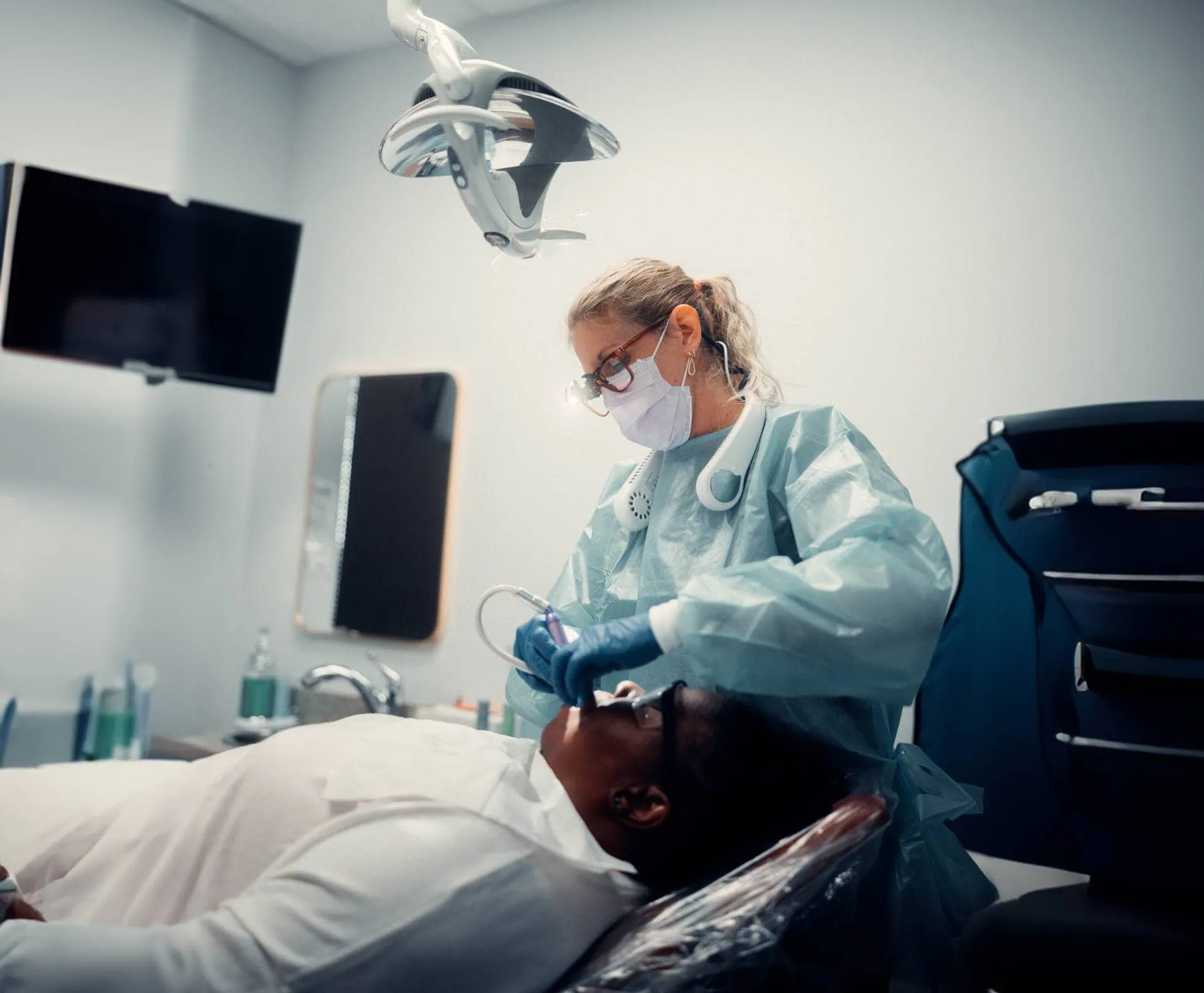
Getting a dental bridge at SmileHQ in Washington, D.C. is a straightforward, step-by-step process that’s usually completed in two visits over a few weeks. Your first exam allows our dental providers to evaluate the gap and supporting teeth, the second visit places your custom bridge, and every step in between is designed with your comfort in mind.
Here’s what to expect from start to finish:
- Initial exam. One of our smile consultants will examine your missing tooth area, check the health of nearby teeth, take digital X-rays, and discuss whether a bridge is the right choice. If implants are a better fit, we’ll talk through that option too.
- Preparation of the anchor teeth. The teeth on either side of the gap, called abutments, are gently reshaped to make room for crowns that will hold your bridge in place. We use local anesthetic so the area stays fully comfortable throughout.
- Impressions and shade matching. We take precise impressions of your teeth and select a porcelain shade that matches your natural smile. These details are sent to a trusted dental lab where your bridge is custom made.
- Temporary bridge placement. While your permanent bridge is being crafted, you’ll wear a temporary one so you can eat, speak, and smile normally in the meantime.
- Final fitting and bonding. At your second visit, we remove the temporary, check the fit and bite of your new bridge, make any needed adjustments, and bond it permanently in place.
- Aftercare guidance. Our dental providers walk you through how to brush, floss under the bridge with special tools, and keep up with routine checkups so your restoration lasts.
Types of Dental Bridges in Washington, D.C. & Are You a Candidate?
There are four main types of dental bridges, and the right one depends on where the missing tooth is, how healthy the nearby teeth are, and your overall oral health. During your exam at SmileHQ, our dental providers will walk you through the options and recommend the best fit for your smile.
The Four Main Bridge Types
Are You a Good Candidate?
You may be a good candidate for a dental bridge if you:
- Are missing one or a few teeth in a row
- Have healthy adjacent teeth or implants that can support the restoration
- Have healthy gums and good overall oral health
- Want a fixed solution rather than a removable partial denture
- Are committed to good home care and routine checkups
Bridges vs. Dentures vs. Implants
Each tooth replacement option works a little differently, and the table below breaks down the key differences at a glance:
A bridge feels like part of your natural smile, while a partial denture comes in and out for cleaning. Many of our patients prefer bridges because they don’t have to take anything out, and chewing tends to feel more stable. Dentures can be a better choice when several teeth are missing throughout the mouth or when nearby teeth aren’t strong enough to support a fixed restoration.
The best way to know what’s right for you is an exam at SmileHQ. Our dental providers will review your options, including implants, and help you decide based on your goals and your oral health.
Why Choose SmileHQ in Washington, D.C.
SmileHQ was designed to transform the typical patient experience at the dentist, and that includes how we approach restorative care like dental bridges. Our Washington, D.C. practice brings together an experienced group of smile consultants under one roof, so you can move from exam to crown to bridge without bouncing between practices.
What sets us apart for dental bridge care:
- An experienced restorative team. Our dental providers bring years of hands-on experience to every bridge, from the initial exam through the final fitting.
- Custom porcelain craftsmanship. Every bridge is shade-matched and shaped to blend with your natural smile.
- Full restorative care in one space. From implants to crowns to bridges, we handle the entire restoration in-house.
- Comfort options. Nitrous oxide is available to help you feel relaxed during longer visits.
- Trusted credentials. Our dental providers hold DDS and DMD degrees, and we’re proud of the experienced specialists who make up our practice.
- Clear guidance tailored to you. We’ll walk you through your options, the cost, and the timeline so there are no surprises.
Frequently Asked Questions About Dental Bridges
How long do dental bridges last?
With proper care, dental bridges typically last many years, and in many cases they hold up well over a decade or more . Daily brushing, flossing underneath the pontic with a floss threader or water flosser, and routine checkups at SmileHQ all extend the life of your bridge. Avoiding chewing on hard items like ice or pen caps also helps protect the porcelain.
How much does a dental bridge cost in Washington, D.C.?
The cost of a dental bridge in Washington, D.C. depends on the type of bridge, the materials used, and how many teeth are being replaced. During your exam at SmileHQ, we’ll provide a clear estimate after reviewing your specific case. We also offer an online payment portal and a payment calculator to help you plan for treatment in a way that works for your budget.
Is getting a dental bridge uncomfortable?
Most patients are surprised by how comfortable the bridge process is. We use local anesthetic to keep the area fully comfortable during preparation, and nitrous oxide is available if you’d like extra relaxation. Some mild tenderness in the gums or anchor teeth for a few days afterward is normal and usually settles quickly on its own.
Dental bridge vs. dental implant: which is right for me?
It depends on the health of your neighboring teeth and your long-term goals. A bridge uses the neighboring teeth as anchors and is generally faster to complete, while an implant replaces the tooth root itself and stands independently without altering nearby teeth. Implants tend to last longer and protect bone health, but bridges can be a great option when neighboring teeth already need crowns or when an implant isn’t ideal. Our dental providers will help you choose at your exam.
How do I clean and care for a dental bridge?
Caring for a bridge is similar to caring for your natural teeth, with one small addition. Brush twice a day, floss daily, and use a floss threader, super floss, or water flosser to clean underneath the pontic where food can collect. Routine checkups every six months let our dental providers monitor the bridge and the supporting teeth.
Will insurance cover my dental bridge?
Many dental insurance plans cover a portion of bridge treatment because it’s considered a restorative procedure. Coverage varies by plan, so the team at SmileHQ will help review your benefits and explain what to expect before treatment begins.
Schedule Your Dental Bridge Exam in Washington, D.C.
Ready to fill that gap and get back to smiling with confidence? Our practices in Washington, D.C. and Bowie, MD welcome new and returning patients for dental bridge exams. During your visit, our smile consultants will examine your smile, walk you through your tooth replacement options, and build a treatment plan that fits your goals.
Request an exam online at SmileHQ to get started on a healthy smile. Your smile is in good hands.